

Your Guide to Locating a Misdemeanor Lawyer Near You
May 12, 2025
Facing Federal Charges: What You Need to Know
If you’re searching for a Federal Crimes Lawyer Atlanta, you need immediate guidance from an attorney who specializes in federal defense. Here’s what you need to know right away:
| What to Look For in a Federal Crimes Lawyer | Why It Matters |
|---|---|
| Licensed in federal court (Northern District of Georgia) | State court attorneys often lack federal experience |
| Experience with federal sentencing guidelines | Federal penalties are typically much harsher than state |
| Track record handling similar federal cases | Federal prosecutors have nearly unlimited resources |
| Direct access to senior attorneys (not junior staff) | Your case is too important for miscommunication |
| Free initial consultation | Evaluate fit before committing financially |
Federal Crimes Lawyer Atlanta professionals differ significantly from state criminal defense attorneys. Federal cases involve distinct procedures, stricter sentencing guidelines, and prosecution by the U.S. Attorney’s Office rather than local district attorneys.
“Federal criminal charges are extremely serious and will be prosecuted by a government with unlimited resources, often leading to harsh sentences in violent federal prisons,” notes one experienced Atlanta federal defense attorney.
When you’re facing federal charges, the stakes couldn’t be higher. Unlike state charges, federal prosecutions typically have conviction rates above 90% and carry substantially longer prison terms. Federal agencies like the FBI, DEA, and IRS dedicate extensive resources to building cases before charges are even filed.
Most importantly, federal investigations often begin long before you’re aware you’re a target. By the time you receive a target letter or grand jury subpoena, federal prosecutors have likely spent months gathering evidence against you.
The Northern District of Georgia federal court in Atlanta handles cases from drug trafficking and fraud to firearms violations and white-collar crimes. Each requires specialized defense strategies that address federal-specific elements and procedures.
Don’t wait to seek representation. Federal timelines move quickly, with the Speedy Trial Act mandating trial within 70 days of your first appearance. Early intervention by an experienced federal defense attorney can sometimes prevent charges from being filed at all.

Important Federal Crimes Lawyer Atlanta terms:
– Atlanta bank fraud attorney
– Atlanta money laundering attorney
– Federal sentencing guidelines lawyer
Understanding Federal vs. State Crimes in Georgia
When you’re facing criminal charges in Georgia, knowing whether you’re in the state or federal system makes all the difference. This isn’t just about which courthouse you’ll visit – it’s about the entire approach to your defense.
Federal crimes violate laws passed by Congress, while state crimes break Georgia state laws. The difference affects everything from who investigates your case to how long you might spend behind bars if convicted.
“Federal crimes are some of the most serious matters you can run afoul of,” as one veteran Atlanta defense attorney puts it. “The constitutional basis for federal jurisdiction comes primarily from Article I, Section 8 of the U.S. Constitution.”
Federal prosecutors (Assistant U.S. Attorneys) typically only take cases with a “substantial federal interest,” such as:
- Crimes occurring on federal property like federal buildings or national parks
- Offenses that cross state lines
- Violations affecting interstate commerce
- Crimes against federal officials or agencies
- Large-scale drug operations
- Sophisticated financial schemes
The penalties between federal and state systems can be dramatically different:
| Offense Type | Federal Penalty Range | Georgia State Penalty Range |
|---|---|---|
| Drug Trafficking | 5 years to life; up to $10M fine | 1-30 years |
| Fraud | Up to 20 years; substantial fines | 1-20 years |
| Firearms | Up to 10 years; improved for prior convictions | 1-5 years |
| Healthcare Fraud | Up to 10 years; 20 years if serious injury | 1-10 years |
| Money Laundering | Up to 20 years; $500K or 2x funds involved | 1-10 years |
Key Differences in Courts & Laws
Federal criminal law lives primarily in Title 18 of the U.S. Code (though other titles contain specific crimes like tax offenses in Title 26). Georgia state crimes are defined in the Official Code of Georgia Annotated (O.C.G.A.).
The courts operate under completely different rulebooks. Federal courts follow the Federal Rules of Criminal Procedure, while Georgia state courts have their own procedural guidelines. This creates two entirely separate legal worlds requiring distinct defense approaches.
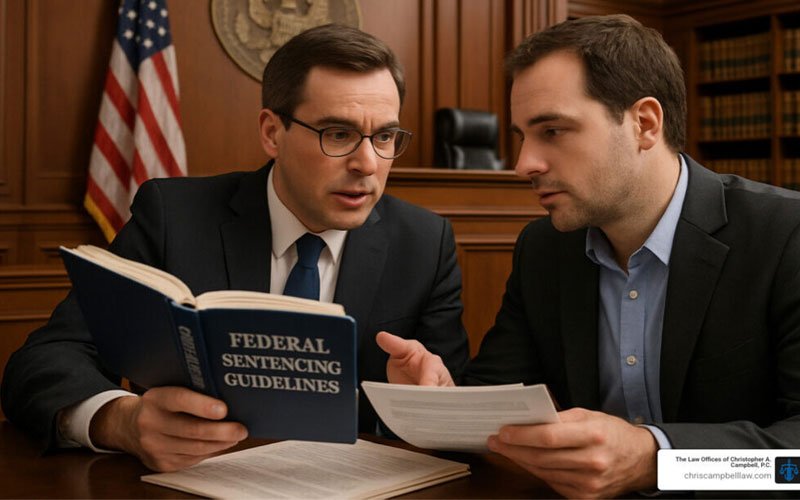
Perhaps the most significant difference comes at sentencing time. Federal cases follow the Federal Sentencing Guidelines – a complex system calculating punishment based on offense level, criminal history, and various factors that can increase sentences. While technically “advisory” since 2005, judges still give these guidelines tremendous weight.
“Federal sentencing guidelines are exceedingly complex and often result in much stiffer punishment than state systems,” notes a Federal Crimes Lawyer Atlanta with decades of experience.
The trial process itself differs too, with federal courts having stricter evidence rules, different jury selection methods, and unique procedures for filing motions.
When Both Systems Can Charge You
Here’s something that surprises many people: both federal and state authorities can prosecute you for the same underlying conduct without violating double jeopardy protections. This concept, known as “dual sovereignty” or “concurrent jurisdiction,” means you could potentially face two separate prosecutions for one act.
For example, someone selling drugs in Atlanta could face:
– Georgia state drug trafficking charges in Fulton County Superior Court
– Federal drug distribution charges in the U.S. District Court for the Northern District of Georgia
While this “double prosecution” scenario doesn’t happen often, it highlights why understanding the federal-state distinction matters so much. Each system requires different defense strategies and potentially different defense attorneys.
“Under concurrent jurisdiction, both state and federal governments can prosecute the same conduct without double jeopardy protection,” explains a Federal Crimes Lawyer Atlanta professional. “This is because state and federal offenses are considered legally distinct, even when based on identical facts.”
This distinction becomes particularly important when you’re searching for the right attorney. A lawyer who excels in Georgia state courts may have limited experience with federal procedures, sentencing guidelines, and the unique approach needed for federal defense.
Federal Jurisdiction Triggers and Common Charges in Atlanta
When a criminal case lands in federal court instead of state court, it’s not by chance. The federal government has specific “triggers” that bring cases under their jurisdiction—and understanding these can help you make sense of why your case might be federal.
Interstate commerce is perhaps the most common pathway to federal charges. If your alleged activities crossed state lines or affected commerce between states, federal authorities can step in. This includes using phones or the internet for criminal activity, as these are considered instruments of interstate commerce.
Federal property crimes automatically fall under federal jurisdiction. If you’re accused of an offense on federal land—whether it’s a national park, military base, or the Richard B. Russell Federal Building in downtown Atlanta where federal cases are prosecuted—you’ll face federal charges.
Other major triggers include crimes against federal employees, criminal activity spanning multiple states, and offenses with international connections. The government also takes cases with a substantial federal interest—a somewhat flexible standard that gives prosecutors discretion.
In Atlanta, the Northern District of Georgia handles a wide range of federal offenses. Drug cases make up a significant portion, particularly large-scale trafficking operations and drug conspiracies that can carry mandatory minimum sentences. These aren’t simple possession cases—federal prosecutors typically focus on distribution networks, manufacturing operations, and multi-defendant conspiracies.
White-collar crimes are heavily prosecuted in Atlanta’s federal courts. Healthcare fraud has become particularly common, with Medicare and Medicaid schemes drawing serious attention. Other financial crimes like bank fraud, wire fraud, securities violations, and tax evasion regularly appear on the federal docket. Since the pandemic, PPP loan fraud cases have surged as well.
Firearms offenses, especially possession by prohibited persons like convicted felons, represent another major category. The penalties for these charges are often much harsher than their state counterparts.
Federal cases don’t just appear overnight. They’re investigated by agencies with tremendous resources—the FBI, DEA, IRS, ATF, Homeland Security, Secret Service, and others. As one Atlanta defense attorney puts it, “When the feds are involved, they’ve usually been watching for months, building evidence methodically before anyone realizes they’re a target.”
How a Case Becomes Federal
The journey to federal prosecution follows a distinct path. It typically begins with an investigation by one or more federal agencies. This might stem from tips, surveillance operations, or referrals from state law enforcement.
Unlike state cases, federal prosecutions almost always involve a grand jury, which reviews evidence and issues subpoenas for documents, testimony, or other materials. This process can take months or even years.
If you’re under investigation, you might receive a target letter informing you that you’re likely to be charged. This is a critical moment to contact a Federal Crimes Lawyer Atlanta professional who understands federal defense.
The U.S. Attorney’s Office makes the final charging decision based on evidence and whether the case meets their standards. If they move forward, the grand jury issues a formal indictment, followed by your arrest or summons to appear in court.
Most Prosecuted Offenses in the Northern District
According to data from the U.S. Sentencing Commission, certain types of cases dominate Atlanta’s federal courts:
Drug conspiracies lead the list, particularly those involving multiple defendants and substantial quantities. These cases often carry harsh mandatory minimum sentences that can reach decades in federal prison.
Healthcare fraud has made Atlanta something of a hotspot for federal prosecution. From genetic testing schemes to durable medical equipment fraud, these cases have become increasingly common.
Financial crimes like wire fraud, bank fraud, and money laundering make up another significant category, especially cases involving substantial monetary losses.
Firearms offenses and immigration violations round out the most common federal charges in the Northern District of Georgia.
What makes these cases particularly challenging is the resources behind them. Federal investigators and prosecutors have significantly more time, money, and personnel than their state counterparts. By the time charges are filed, they’ve often built a formidable case—which is why having an experienced Federal Crimes Lawyer Atlanta is absolutely essential.
Federal Crimes Lawyer Atlanta: How to Vet and Hire Counsel
When facing federal charges in Atlanta, finding the right attorney isn’t just important—it could literally determine whether you spend years behind bars or walk free. Unlike state cases, federal charges require a completely different skill set and experience level.
“Many lawyers claim to handle federal cases but rarely actually step foot in federal court,” one seasoned defense attorney told me recently. This highlights why careful vetting is absolutely essential.
At The Law Offices of Christopher A. Campbell, P.C., we suggest evaluating potential Federal Crimes Lawyer Atlanta candidates based on several key factors:
First, confirm they’re actually admitted to practice in the Northern District of Georgia federal court. This might seem obvious, but you’d be surprised how many attorneys lack this basic qualification.
Look for someone who dedicates a substantial portion of their practice to federal defense. An attorney who handles one federal case a year simply won’t have the depth of knowledge needed for your defense.
Your attorney should have specific experience with your particular type of charge. Federal drug conspiracy cases operate differently than fraud cases, which differ from firearms charges.
When interviewing potential attorneys, pay attention to how they explain the Federal Sentencing Guidelines. These guidelines are incredibly complex—if an attorney can’t clearly explain how they might apply to your case, that’s a red flag.
While most federal cases resolve through plea agreements, you want someone ready and willing to take your case to trial if necessary. Ask directly about their federal trial experience and outcomes.
Who will actually handle your case? At many firms, you meet with the senior attorney during consultation, but then a junior associate or paralegal manages your day-to-day representation. At our firm, we believe direct attorney-client communication is essential in high-stakes federal matters.
For more detailed information about our approach to federal defense, visit our Federal Crimes Lawyer Atlanta page.
Essential Qualifications for a Federal Crimes Lawyer Atlanta
Beyond the basics, several specific qualifications separate truly effective Federal Crimes Lawyer Atlanta professionals from the merely adequate:
Northern District of Georgia Experience matters tremendously. Each federal district has its own local rules, procedures, and judicial personalities. An attorney familiar with Atlanta’s federal judges knows their preferences and tendencies—knowledge that can make a real difference in your case outcome.
Eleventh Circuit Appeals Experience provides another layer of protection. Federal convictions are appealed to the Eleventh Circuit Court of Appeals. An attorney who understands appellate review will make strategic trial decisions with potential appeals in mind.
Federal Findy Management capabilities are crucial. Federal cases often involve overwhelming amounts of evidence—sometimes tens of thousands of pages. Your attorney needs systems to organize and analyze these materials effectively. As one defense lawyer put it, “Federal prosecutors sometimes intentionally bury the defense in paperwork.”
Relationships with prosecutors shouldn’t be underestimated. Established Federal Crimes Lawyer Atlanta professionals have working relationships with the Assistant U.S. Attorneys who’ll be prosecuting your case. These professional connections can facilitate more productive negotiations.
Your attorney should thoroughly understand pre-trial diversion programs and cooperation benefits. In many federal cases, cooperation with authorities can dramatically reduce sentences—but these agreements must be carefully negotiated to provide maximum benefit with minimal risk.
Questions to Ask Your Federal Crimes Lawyer Atlanta During Consultation
When you sit down for your initial consultation, come prepared with these questions:
“What percentage of your practice focuses on federal criminal defense?” Look for someone who dedicates at least half their practice to federal cases.
“How many cases similar to mine have you handled in the Northern District?” Specific experience with your charge type is invaluable.
“Walk me through your approach to federal plea negotiations versus trial preparation.” Their answer will reveal their strategic philosophy and help you assess compatibility.
“How will we communicate throughout my case?” Will you speak directly with the attorney? How quickly can you expect responses to urgent questions?
“What types of experts might you bring in for my defense?” Federal cases often require specialized experts; your attorney should have relationships with relevant professionals.
“Can you explain your fee structure in detail?” Federal defense is expensive—understand exactly what services are covered and what might cost extra.
“What’s a realistic timeline for my case?” This helps set proper expectations about the process ahead.
“Based on what you know now, what are possible outcomes for my situation?” While no guarantees can be made, experienced attorneys can outline realistic scenarios.
At The Law Offices of Christopher A. Campbell, P.C., we believe in straightforward communication from day one. We help clients understand both the challenges they face and the opportunities for effective defense in their federal cases.
The Federal Case Timeline: Investigation, Trial, Sentencing, Appeal
When you’re facing federal charges, understanding the timeline helps you prepare both mentally and strategically. The federal criminal process follows a distinct path with crucial deadlines that work quite differently from what you might expect in state court.

The journey often begins long before you even know you’re under investigation. Federal agents might be building a case against you for months or even years, gathering evidence through surveillance, witness interviews, and document collection. Your first clue might be receiving a target letter, a grand jury subpoena, agents executing a search warrant, or simply a request for an interview from federal agents.
Once charges are filed, things move into the formal court process. At your initial appearance and arraignment, a judge will inform you of the charges and your rights. This is also where bail is determined—and I should warn you that federal detention standards are typically much stricter than in state courts. You’ll enter a formal plea, which is usually “not guilty” at this early stage.
“The Speedy Trial Act of 1974 requires a trial within 70 days of a defendant’s first appearance, with limited exceptions to pause the clock,” explains one federal defense attorney I know. While this sounds quick, there are many ways this clock can be paused.
The next phase involves findy and pretrial motions. The government will provide evidence, often in overwhelming quantities. At The Law Offices of Christopher A. Campbell, P.C., we carefully review this material to identify potential defenses and file appropriate motions to suppress evidence or dismiss charges where possible.
Most federal cases—over 90%—resolve through plea agreements rather than trials. These negotiations may happen at any point in the process, but federal plea agreements are highly structured and often time-sensitive.
If your case goes to trial, expect the process to last anywhere from one to three weeks. The government presents its case first, followed by the defense. Because federal prosecutors have typically spent months preparing, the defense faces a significant challenge.
After a conviction (whether by plea or trial), sentencing usually occurs 60-90 days later. This process is governed by the Federal Sentencing Guidelines, which provide a structured framework for determining punishment. For a deeper understanding of how these guidelines work, you can review the Sentencing Guidelines published by the U.S. Sentencing Commission.
The final stage is appeals, which must be filed within 14 days of judgment. Appeals are handled by the Eleventh Circuit Court of Appeals and typically take 1-2 years to resolve. Appeals address legal errors, not factual disputes about your case.
Critical Deadlines You Must Know
Understanding and meeting deadlines in federal cases can literally make or break your defense. The 70-day Speedy Trial clock starts running at your indictment or initial appearance. Missing this deadline can sometimes result in dismissal of charges, though various factors can “toll” or pause this clock.
Pretrial motion deadlines are equally critical. Most standard motions must be filed within 14 days after arraignment, while motions to suppress evidence typically must be filed within 30 days. Miss these deadlines, and you might permanently lose important rights.
There’s no formal deadline for findy review, but practical time constraints exist—you must thoroughly review all materials before your pretrial motion deadlines expire. Plea agreement deadlines are often set by the court or prosecution, and missing them can result in less favorable terms or withdrawal of offers altogether.
After conviction, you’ll have just 14 days to object to findings in your Presentence Report—a crucial period for challenging guideline calculations that directly impact your sentence. Similarly, you must file a notice of appeal within 14 days of judgment, or you’ll likely forfeit your appeal rights entirely.
At The Law Offices of Christopher A. Campbell, P.C., we maintain rigorous tracking of all these deadlines to ensure you never miss an opportunity to strengthen your defense.
Role of Pre-Sentence Investigation
The Presentence Investigation Report (PSR) might be the single most important document in determining your sentence. After you’ve been found guilty or pleaded guilty, a U.S. Probation Officer will prepare this comprehensive report by interviewing you, reviewing case materials, investigating your criminal history, calculating guideline ranges, and assessing your personal background.
“Work closely with the U.S. Probation Office for guideline analysis agreement,” one federal defense attorney advises. “Review the Presentence Investigation Report thoroughly with the client.”
The PSR recommends a specific guideline range and identifies potential grounds for departures or variances. Both the prosecution and defense can object to factual findings or guideline calculations in the report, making this a critical opportunity to potentially reduce your sentence.
Character evidence becomes extremely valuable at this stage. Letters from family members, employers, community leaders, and others can significantly impact sentencing outcomes. We guide our clients through collecting and presenting effective character evidence that paints a complete picture of who you are beyond the charges you face.
This pre-sentence period offers a crucial window to influence your case outcome, and having a Federal Crimes Lawyer Atlanta who understands the nuances of this process can make a meaningful difference in your final sentence.
Defense Strategies, Sentencing & Life After Conviction
Fighting federal charges requires a custom approach based on your unique situation. At The Law Offices of Christopher A. Campbell, P.C., we develop defense strategies that address the specific circumstances of your case.
Many successful defenses begin with constitutional challenges. Was evidence gathered through an illegal search? Did agents question you without reading your rights? These Fourth and Fifth Amendment violations might lead to evidence suppression—potentially crippling the government’s case against you.
“I’ve seen cases completely fall apart after a successful motion to suppress,” shares one Atlanta federal defense attorney. “When key evidence gets thrown out, prosecutors sometimes have no choice but to dismiss charges.”
Beyond constitutional issues, we examine every factual detail. Perhaps you have an alibi placing you elsewhere, or the prosecution can’t prove you knew about illegal activity. Chain-of-custody problems with evidence handling can create reasonable doubt. In some cases, entrapment or advice-of-counsel defenses might apply if you were induced by government agents or relied on an attorney’s guidance.
When it comes to federal sentencing, preparation begins long before conviction. We work to:
- Minimize your guideline calculations by challenging improvement factors
- Identify grounds for downward departures from guidelines
- Present compelling personal history through character witnesses
- Demonstrate your rehabilitation potential and community connections
- Highlight any cooperation you’ve provided to authorities
The difference between effective and inadequate sentencing advocacy can mean years of freedom.
Possible Case Outcomes
While most people fear the worst when charged federally, many possible outcomes exist:
Dismissal happens more often than you might think. Sometimes evidence problems lead prosecutors to voluntarily dismiss charges. In other cases, successful legal motions convince a judge to throw out the case.
Deferred prosecution agreements offer first-time, non-violent offenders a chance to avoid conviction by meeting certain conditions. While historically rare in federal court, these opportunities have expanded in some districts.
Negotiated pleas remain the most common resolution, accounting for over 90% of federal cases. A skilled Federal Crimes Lawyer Atlanta can often negotiate significantly better terms than defendants receive without representation. Even when pleading guilty seems inevitable, the specific charges, sentencing recommendations, and cooperation terms can vary dramatically based on your attorney’s effectiveness.
Trial verdicts represent the traditional path through the justice system. While federal conviction rates are high, a well-prepared defense team can achieve acquittals or partial victories, especially when constitutional rights were violated.
“Federal authorities become much more reasonable negotiators when they know you’re prepared to take them to trial,” notes one defense attorney, highlighting why strong representation matters even when pursuing plea agreements.
For more comprehensive information about felony defense strategies, visit our article on why you need a felony crime lawyer in Atlanta.
Rebuilding After a Federal Conviction
The challenges of a federal conviction extend far beyond any prison sentence. Many clients worry most about rebuilding their lives afterward.
Employment becomes immediately more difficult. Background checks reveal federal convictions, professional licenses may be restricted, and security clearances often disappear. Even years later, job applications typically require disclosure of federal convictions.
Financial impacts can be severe and long-lasting. Beyond potential restitution and asset forfeiture, you may struggle to obtain loans, credit, or housing. Some convictions trigger civil liability in related matters.
For non-citizens, immigration consequences can be devastating. Many federal convictions create deportation risks, inadmissibility issues, and barriers to naturalization.
Civil rights limitations vary by state but often include voting restrictions, firearm possession prohibitions, and exclusion from jury service. Some public benefits may become unavailable.
At The Law Offices of Christopher A. Campbell, P.C., we don’t abandon clients after sentencing. We provide guidance on post-conviction strategies including:
- Pursuing record sealing where legally available
- Seeking early termination of supervised release
- Applying for certificates of rehabilitation
- Exploring presidential pardon possibilities
- Addressing collateral consequences in specific industries
One client recently shared: “I thought my career was over after my conviction, but with proper guidance, I was able to terminate my supervised release early and rebuild my professional life much sooner than expected.”
The road after a federal conviction presents challenges, but with proper legal support, you can steer toward a brighter future.
Practical Guidance: Fees, Consultations, and Immediate Next Steps
When you’re facing federal charges, understanding the financial side of your defense helps you make clearer decisions during an incredibly stressful time.
Most Federal Crimes Lawyer Atlanta professionals structure their fees in one of three ways:
Federal defense attorneys typically charge between $300-600 per hour in Atlanta, usually requiring a substantial upfront retainer. This approach works best when your case has an uncertain scope or timeline. Alternatively, many attorneys offer flat fee arrangements where you pay a single amount for specific services – sometimes divided into phases like investigation, pretrial work, and trial. While this gives you cost certainty, the initial investment might be higher. Some lawyers use hybrid structures, combining flat fees for certain phases with hourly billing for others, particularly trial work.
Why do federal cases cost significantly more than state cases? The complexity runs deeper – federal procedures are more demanding, cases typically last longer, motion practice is extensive, specialized experts are often necessary, and the sheer volume of evidence to review can be overwhelming.
“Federal cases often involve thousands of pages of evidence and complex legal issues that simply don’t exist in state court,” explains one Atlanta defense attorney. “The investment reflects the extraordinary amount of work required to mount an effective defense.”
At The Law Offices of Christopher A. Campbell, P.C., we believe in complete transparency about fees during your initial consultation. We’ll explain exactly what services are covered and what factors might affect your total costs.
If federal investigators contact you or you receive a target letter or subpoena, taking the right immediate steps is crucial:
Stay silent with investigators until you have counsel present. Your Fifth Amendment right is your protection – use it. Never consent to searches without a warrant, and preserve all potentially relevant documents without altering them. Contact a federal defense attorney immediately – this should be your absolute first priority. Avoid discussing your situation with anyone except your attorney, as these conversations aren’t privileged. Keep off social media completely regarding your case, and follow your attorney’s guidance to the letter.
For more essential wisdom about criminal defense, read our article on What Every Atlanta Criminal Lawyer Wishes Their Clients Knew.
FAQ—Immediate Actions
Q: Should I speak with FBI agents who want to “just ask a few questions”?
A: Absolutely not. Even if they present it as casual or helpful, politely decline and clearly state that you want an attorney present for any questioning. Those “few innocent questions” can become problematic evidence later.
Q: What should I do if agents show up with a search warrant?
A: Don’t interfere with their search, but don’t volunteer information or consent to searches beyond what the warrant specifically covers. Call your attorney immediately while the search is happening.
Q: Should I turn over my phone or computer if requested?
A: Without a warrant, you have no obligation to provide electronic devices. If they have a warrant, you must comply, but clearly state that you don’t consent to the search and request to call your attorney right away.
Q: What if I’m served with a grand jury subpoena?
A: Contact an attorney immediately. Don’t destroy or alter any documents mentioned in the subpoena – this could lead to serious obstruction charges that may be worse than the original investigation.
Q: Can I tell family members about the investigation?
A: Talk to your attorney first. Conversations with family aren’t legally protected, meaning they could potentially be forced to testify about what you told them.
FAQ—Sentencing Concerns
Q: Are the Federal Sentencing Guidelines mandatory?
A: They’re advisory since the Supreme Court’s 2005 Booker decision, not mandatory. However, judges still give them substantial weight and must consider them when determining your sentence.
Q: What factors can reduce my federal sentence?
A: Several factors can help: cooperation with authorities, accepting responsibility, having a minor role in the offense, lack of criminal history, and personal circumstances that warrant leniency can all potentially reduce your sentence.
Q: What is a “downward departure” or “variance”?
A: These are legal mechanisms allowing judges to sentence below the guideline ranges. Departures are based on specific factors recognized in the guidelines, while variances stem from the judge’s consideration of general sentencing factors.
Q: Will I definitely go to prison if convicted of a federal crime?
A: Not necessarily. While many federal convictions do result in prison time, alternatives exist for certain offenses and offenders, including probation, home detention, and community confinement.
Q: Can my sentence be reduced after it’s imposed?
A: In limited circumstances, yes. Options include Rule 35 motions (for substantial assistance after sentencing), compassionate release for health reasons, retroactive guideline amendments, and presidential clemency.
FAQ—Speedy Trial Timeline
Q: What is the Speedy Trial Act’s 70-day rule?
A: Federal law requires that your trial begin within 70 days of your indictment or initial appearance (whichever happens later). However, numerous exceptions exist that can extend this timeline significantly.
Q: What stops the Speedy Trial clock?
A: Many events “toll” (pause) the clock, including pretrial motions, competency evaluations, interlocutory appeals, continuances granted in the “interests of justice,” and any periods when the defendant is unavailable.
Q: Can I waive my Speedy Trial rights?
A: Yes, and in complex cases, defendants often do waive these rights to allow adequate preparation time for their defense. This is sometimes in your best interest.
Q: What happens if the 70-day limit is violated?
A: The indictment must be dismissed. However, the judge decides whether it’s dismissed “with prejudice” (meaning charges can’t be refiled) or “without prejudice” (allowing prosecutors to start over), depending on several factors.
Q: How long do federal cases typically take despite the Speedy Trial Act?
A: Despite the 70-day rule, federal cases commonly take 9-18 months from indictment to resolution due to various exceptions and waivers that extend the timeline. Complex cases can take even longer.
Conclusion
Facing federal criminal charges in Atlanta can feel overwhelming. The federal justice system is a different world compared to state courts – with its own rules, procedures, and significantly higher stakes. This isn’t a journey anyone should take alone.
At The Law Offices of Christopher A. Campbell, P.C., we’ve guided countless clients through the federal criminal justice maze. We understand the sleepless nights, the worry about your future, and the impact these charges have on your family. That’s why we approach each case with not just legal expertise, but genuine compassion.
Our approach combines three essential elements that make a difference in federal cases:
First, we prepare exhaustively. Federal prosecutors build cases carefully over months or years – we match that dedication in your defense.
Second, we develop strategic defense plans custom to your specific situation. Cookie-cutter approaches don’t work in federal court.
Third, we provide unwavering support throughout this challenging time. You’ll never feel in the dark about your case or your options.
We proudly serve clients throughout Metro Atlanta, including Atlanta proper, Cobb County, and Marietta. Our team has the depth of federal court experience necessary to protect your rights when it matters most.
Time is truly of the essence in federal cases. The early stages – sometimes even before formal charges – often present the best opportunities to influence the outcome. Whether it’s negotiating with prosecutors, preventing charges from being filed, or preparing for trial, early intervention makes a crucial difference.
Contact The Law Offices of Christopher A. Campbell, P.C. today for a free consultation. We’ll sit down, listen to your story, and provide honest guidance about what you’re facing and how we can help. No pressure, no judgment – just clear information when you need it most.
For more detailed information about our federal criminal defense services, visit our Federal Crimes Lawyer Atlanta page.
Remember this above all else: The decisions you make now, especially who you choose to represent you, can significantly impact your case’s outcome. Don’t face the federal system alone – get a dedicated Federal Crimes Lawyer Atlanta on your side today.