

The Price of Protection: How Much Does a Domestic Violence Defense Attorney Cost?
May 6, 2025
Unlocking the Secrets of Top Criminal Defense Lawyers
May 6, 2025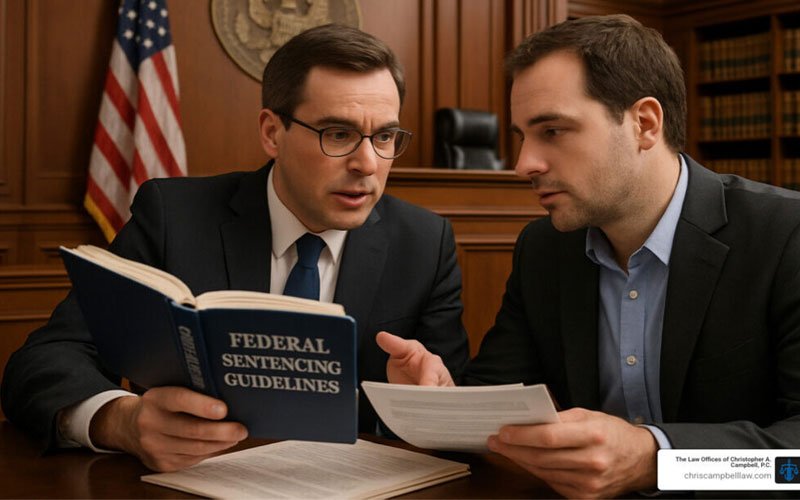
Navigating the Federal Sentencing Maze
When you’re facing federal charges, the path ahead can feel overwhelming. At the heart of this journey stands the federal sentencing guidelines lawyer – your navigator through one of the most complex aspects of criminal law.
Think of the Federal Sentencing Guidelines as a massive rulebook – over 600 pages long – that judges consult when deciding how much time someone should serve. These guidelines aren’t simple reading; they’re filled with calculations, exceptions, and legal nuances that can dramatically impact your future.
“In federal criminal cases, sentences are imposed in accordance with the Federal Sentencing Guidelines. If you are facing criminal charges in federal district court, understanding the Federal Sentencing Guidelines – and how and when they apply – is crucial to making informed decisions about your defense,” notes a prominent legal resource on federal sentencing.
A federal sentencing guidelines lawyer does far more than just understand this complex system – they actively work to use it in your favor. They can challenge how your offense level is calculated, argue for reductions based on your role in the offense, and develop compelling arguments for why the judge should consider factors outside the guidelines.
The reality is sobering: over 90% of federal defendants are ultimately convicted, typically through plea agreements. This makes what happens at sentencing perhaps the most pivotal moment in your case. With the right representation, you might secure a significantly reduced sentence or even alternatives to incarceration.
Why this guide matters
If you’ve found yourself searching for information about federal sentencing guidelines lawyers, you’re likely at a crossroads. Maybe you’re weighing a plea offer, facing an upcoming sentencing hearing, or just beginning to understand what federal charges might mean for your future.
The decisions you make now matter deeply. When the average federal drug trafficking sentence exceeds 70 months, every potential reduction in your sentence represents precious time with family, career opportunities, and freedom. The difference between a well-prepared sentencing strategy and a poorly executed one isn’t measured in days – it’s measured in years.
Throughout this guide, we’ll walk you through not just the mechanics of how the Federal Sentencing Guidelines work, but how a skilled lawyer can help position you for the best possible outcome. We’ll explore the calculations that determine sentencing ranges, the opportunities for reductions, and the strategies that can help minimize your time behind bars.
While the guidelines became advisory rather than mandatory after a 2005 Supreme Court decision, they remain the starting point for virtually every federal sentence. Understanding them isn’t optional – it’s essential for anyone facing federal charges in Atlanta or anywhere in the country.
Understanding the Federal Sentencing Guidelines Framework
Ever wonder why federal sentences seem so different from state ones? It all goes back to 1984, when Congress passed the Sentencing Reform Act. Before this, federal judges had almost unlimited freedom when handing down sentences, leading to some pretty unfair results. Someone in California might get 5 years for a crime while someone in Georgia might get 10 years for the exact same offense.
To fix this problem, the Act created the United States Sentencing Commission, an independent agency within the judicial branch. Their job? Create a set of guidelines that would make federal sentencing more fair, transparent, and consistent across the country.
If you’re navigating these waters, the Commission maintains a helpful Guidelines App that provides up-to-date access to the guidelines and tools to understand them better.
What Are the Federal Sentencing Guidelines?
Think of the Federal Sentencing Guidelines as a detailed roadmap that judges use when deciding sentences. They’re essentially a comprehensive set of rules that provide recommended sentencing ranges for nearly every federal crime.
The guidelines cover:
- Base offense levels (starting points) for different crimes
- Specific characteristics that can raise or lower the offense level
- Adjustments based on factors like victim impact or the defendant’s role
- Criminal history calculations
- Policy statements on when to depart from the guidelines
Here’s something important to know: While these guidelines were originally mandatory, the Supreme Court’s decision in United States v. Booker (2005) made them advisory instead. This means judges must calculate and consider the guidelines but aren’t required to stay within the recommended range.
That said, judges still take these guidelines very seriously. As the Legal Information Institute points out, appeals courts often presume sentences are reasonable when they follow the guidelines properly. This is why having a federal sentencing guidelines lawyer who understands these calculations is so crucial to your case.
Offense Level & Criminal History: The Sentencing Table
At the heart of the Federal Sentencing Guidelines is what’s known as the Sentencing Table. Picture a grid with 43 offense levels running down the side and 6 criminal history categories across the top. Where these two factors meet determines your recommended sentencing range in months.
Let’s make this concrete with an example. Say you’re facing a fraud charge with a base level of 7. Because the case involved a $50,000 loss, that adds 6 more levels, bringing your total offense level to 13. If you have no prior criminal history (Category I), your guideline range would be 12-18 months.
But here’s where things get tricky – mandatory minimum sentences can override the guidelines. Look at how this plays out:/
| Offense | Guidelines Range | Mandatory Minimum | Actual Sentencing Range |
|---|---|---|---|
| Drug trafficking (5kg cocaine) | 87-108 months (Level 30, Category I) | 10 years (120 months) | 120 months minimum |
| Bank fraud ($250,000 loss) | 33-41 months (Level 20, Category I) | None | 33-41 months |
| Felon in possession of firearm | 15-21 months (Level 14, Category I) | None | 15-21 months |
A good federal sentencing guidelines lawyer knows these intersections inside and out. They can identify opportunities where proper guideline calculations might allow for sentences below mandatory minimums through special provisions like the “safety valve.”
Who Writes and Updates the Guidelines?
The guidelines aren’t set in stone. They’re regularly updated by the U.S. Sentencing Commission – a bipartisan, independent agency with seven voting members. These members are appointed by the President and confirmed by the Senate.
The Commission follows a predictable amendment cycle each year:
- They publish proposed changes for public comment
- They hold public hearings to gather feedback
- Final amendments go to Congress by May 1
- If Congress doesn’t object, the changes take effect on November 1
This process gives everyone a voice – defense attorneys, prosecutors, judges, and advocacy groups can all provide input on potential changes. In recent years, we’ve seen amendments that reduced sentence recommendations for many drug offenses and addressed issues in white-collar crime calculations.
The public comment period is particularly important. It allows federal sentencing guidelines lawyers to advocate for changes that might benefit future clients. The Commission takes this feedback seriously, analyzing data from more than 317,000 sentencing documents submitted by federal courts nationwide in a recent fiscal year alone.
Understanding these guidelines and how they evolve can make a tremendous difference in your case outcome. At The Law Offices of Christopher A. Campbell, we stay on top of these changes to provide the most current and effective representation possible.
Role of a Federal Sentencing Guidelines Lawyer
A federal sentencing guidelines lawyer walks with you through the entire federal criminal process, but their value truly shines during the sentencing phase. These attorneys understand the intricate details of guideline calculations and know exactly how to work with judicial discretion to fight for the best possible outcome in your case.
I’ve seen many attorneys treat sentencing almost as an afterthought – just another routine task that doesn’t deserve much attention. This approach can be devastating for clients. The truth is, sentencing represents one of the most critical moments in your entire case.
At The Law Offices of Christopher A. Campbell, P.C., we take a different approach. We begin preparing for sentencing from day one, not as some last-minute consideration when it’s too late to make a real difference.
Why You Need a Federal Sentencing Guidelines Lawyer
Since the Booker decision made the guidelines advisory rather than mandatory, judges have gained considerable discretion in sentencing. This change is both an opportunity and a potential risk. While it opens doors for sentences below the guideline range, it also means judges can sentence above the range if they feel it’s warranted.
A federal sentencing guidelines lawyer brings several invaluable skills to your defense. They thoroughly understand the complex 600+ page sentencing manual and can identify every possible adjustment that might benefit you. They work closely with probation officers during the crucial Presentence Investigation Report (PSR) process, ensuring the facts and calculations are accurate and fair.
Your attorney will craft comprehensive legal arguments for downward variances based on factors outlined in 18 U.S.C. Section 3553(a). They’ll gather compelling evidence about your personal history and circumstances that might influence the judge’s decision. When the sentencing hearing arrives, they’ll advocate passionately on your behalf, addressing the judge’s concerns while countering prosecution arguments.
The results can be dramatic. In one case we studied, a client facing a guideline range of 46-57 months received just 18 months after effective advocacy by a federal sentencing guidelines lawyer who knew how to steer the system.
Choosing the Right Federal Sentencing Guidelines Lawyer
Federal court experience matters tremendously. Federal cases involve different procedures, terminology, and strategies than state cases. Look for an attorney who regularly practices in federal courts and understands their unique culture.
Timing is critical – the best time to hire a federal sentencing guidelines lawyer is at the very beginning of your case, not after conviction. Early involvement shapes plea negotiations and PSR preparation in ways that can dramatically affect your sentence.
Be sure you understand how billing works for federal cases, which typically require more time and resources than state cases. Ask specific questions about the sentencing guidelines relevant to your charges to gauge the attorney’s familiarity with them.
A lawyer who knows the judges and prosecutors in the Northern District of Georgia brings valuable insights into local sentencing practices that can benefit your case. At The Law Offices of Christopher A. Campbell, P.C., we’ve built our practice around extensive experience representing clients in federal courts throughout Metro Atlanta, including Cobb County and Marietta.
How an Attorney Shapes the Presentence Investigation Report
The Presentence Investigation Report (PSR) often determines your fate more than any other document in federal sentencing. This report, prepared by a U.S. Probation Officer, details the offense conduct, calculates your guideline range, documents your criminal history, provides personal background information, and recommends a sentence to the judge.
A skilled federal sentencing guidelines lawyer plays a crucial role in shaping this document. Research consistently shows that proactively contacting the probation officer before the draft PSR is prepared significantly improves the final report’s content.
Your attorney will prepare you thoroughly for the probation interview, coaching you on how to approach questions and what information to provide. They’ll be present during these interviews to protect your interests and will submit favorable documentation about your background, education, and community ties.
When necessary, your lawyer will challenge inaccurate or prejudicial information before it appears in the final report. If problems persist, they’ll file formal written objections to factual assertions or guideline calculations that could harm your case.
As one experienced federal defender notes, “Defense advocacy ensures both sides of the story appear in the PSR rather than only the Government’s version.” This balanced presentation can dramatically impact how the judge perceives you and your case when making that final sentencing decision.
Calculating Your Potential Sentence: Step-by-Step
When you’re facing federal charges, understanding how your sentence might be calculated isn’t just helpful—it’s essential for peace of mind. The Federal Sentencing Guidelines create a roadmap that can seem overwhelming, but breaking it down step-by-step makes it more manageable.
The good news? At each step, a federal sentencing guidelines lawyer can find opportunities to advocate for a lower sentence. Let’s walk through how your potential sentence takes shape.
If you want to explore sentencing patterns yourself, the U.S. Sentencing Commission offers an Interactive Data portal where you can see sentencing statistics for various offenses.
Base Offense Level & Specific Characteristics
Every federal charge starts with a base offense level—think of it as your starting point. For example:
Fraud begins at level 7, drug trafficking varies based on substance and amount, and being a felon with a firearm starts at level 14.
From there, specific details about your case can move that number up or down. These details matter tremendously:
With drug cases, quantity is king. Having 5-15 kilograms of cocaine puts you at level 30, while less than 500 grams lands at level 24—a difference that could mean years of your life.
In fraud cases, the dollar amount tells the story. A $50,000 fraud adds 6 levels to your base, while a $1 million fraud adds a whopping 14 levels. The difference? Potentially years of freedom.
For weapons charges, the number of firearms matters. Three guns might add 2 levels, while 30 guns could add 6.
This is where a federal sentencing guidelines lawyer proves invaluable. They’ll scrutinize these calculations, questioning whether that fraud “loss amount” truly reflects actual harm, or whether you should be held responsible for the full drug quantity when you were minimally involved.
Criminal History & Career Offender Rules
Your past follows you in federal court through a point system that determines your “criminal history category”:
Prior sentences exceeding 13 months add 3 points each. Sentences between 60 days and 13 months add 2 points. Shorter sentences typically add 1 point.
These points place you in one of six categories, from Category I (0-1 points) to Category VI (13+ points). The higher your category, the higher your sentencing range.
Time does heal some wounds—convictions over 10-15 years old may not count, depending on their severity. And some minor offenses don’t count at all.
The career offender provision is particularly harsh. If you have two prior convictions for violent crimes or drug offenses, and your current case falls into either category, your offense level and criminal history category automatically skyrocket.
A federal sentencing guidelines lawyer can challenge these calculations by arguing that prior convictions shouldn’t count, are too old, or should be treated as a single sentence. They might also contest whether a prior offense truly qualifies as a “crime of violence”—a technical determination with enormous consequences.
Departures, Variances, Safety Valve & Substantial Assistance
After calculating your initial guideline range, several paths can lead to a lower sentence:
Downward departures are reductions authorized by the guidelines themselves. These might apply if you acted under duress, have diminished capacity, or if your criminal conduct was truly a one-time mistake (called “aberrant behavior”).
Variances give judges flexibility to sentence below the guidelines based on factors like your personal history, the nature of your offense, and the need to avoid unwarranted sentencing disparities.
The safety valve provision can be a lifeline in drug cases. If you meet five specific criteria—including minimal criminal history, no violence or weapons, and truthful cooperation—you can receive a two-level reduction and, crucially, a sentence below any mandatory minimum.
As one defense attorney puts it: “Unlike Georgia’s first offender statute, the federal safety valve doesn’t erase your conviction. But it does give the judge freedom to sentence you based on your individual circumstances rather than a one-size-fits-all mandatory minimum.”
Substantial assistance is the government’s acknowledgment of your cooperation. If prosecutors file what’s called a “5K1.1 motion,” the judge can sentence you below both the guidelines and any mandatory minimum.
A federal sentencing guidelines lawyer knows how to steer these provisions, helping you understand which might apply to your case and advocating forcefully for their application. Their knowledge can make the difference between a guideline sentence and one that truly reflects your individual circumstances.
Strategies to Reduce Time Behind Bars
One powerful tool in sentencing is the humble character letter. Thoughtfully written support letters from family members, employers, community leaders, and mentors can paint a complete picture of who you truly are beyond the charges. These mitigation letters help humanize you in the eyes of the judge, showing your connections, contributions, and the support network waiting for you upon release.
Showing genuine remorse matters tremendously. By demonstrating sincere acceptance of responsibility for your actions, you can earn a 2-3 level reduction in your offense level. The timing of your guilty plea can make all the difference here—pleading early typically secures the full three-level reduction, while waiting until the eve of trial might limit you to just two levels.
For those with lower offense levels, alternatives to prison time might be available:
Zone A (0-6 months): You might qualify for probation without any incarceration.
Zone B (8-12 months): The court could order probation combined with home detention or community confinement instead of prison.
Zone C (10-16 months): You might receive a “split sentence” that combines some prison time with supervised release conditions.
Want to learn more about how we handle federal cases? Visit our federal crimes lawyer page.
Challenging Guideline Calculations
A federal sentencing guidelines lawyer worth their salt will scrutinize every number in your guideline calculations, looking for opportunities to reduce your exposure.
In fraud cases, the loss amount drives everything. Your lawyer should question whether all alleged losses were actually caused by your conduct. Were the “intended loss” calculations realistic or exaggerated? Were certain losses truly foreseeable to you? Should you receive credit for collateral provided or legitimate services rendered? Even small adjustments to loss calculations can mean months or years of freedom.
Drug cases present similar opportunities. Your lawyer might challenge the actual weight of drugs attributed to you, question the purity levels used in calculations, or argue that you shouldn’t be held responsible for drugs handled by others in a conspiracy without your knowledge.
The scope of “relevant conduct” is another battleground. The guidelines consider behavior beyond just the offense of conviction, but your lawyer can argue that certain conduct wasn’t part of the same course of action, wasn’t reasonably foreseeable to you, or shouldn’t be considered part of a “common scheme.”
As one legal researcher notes: “Good attorneys can make constitutional arguments to dissuade judges from considering acquitted conduct or unindicted charges.” This highlights why having someone who thoroughly understands these nuances matters so much.
Mitigation Under 18 U.S.C. Section 3553(a)
Since the Supreme Court’s Booker decision made the guidelines advisory, judges must consider several statutory factors under 18 U.S.C. Section 3553(a) when determining your sentence. This opens up tremendous opportunities for personalized advocacy.
Your federal sentencing guidelines lawyer should craft compelling arguments addressing each relevant factor, emphasizing what makes your situation unique:
Your personal history matters. Evidence of your education, stable employment, family responsibilities, military service, volunteer work, and community ties can significantly impact how a judge views you.
The nature of your offense might be less severe than typical cases. Perhaps you played a minimal role, there was no violence involved, or your participation was brief compared to others.
Your rehabilitation potential is crucial. Steps you’ve already taken—like completing substance abuse treatment, attending counseling, continuing education, or maintaining sobriety—demonstrate your commitment to change.
Community support speaks volumes. Testimony from respected community members who know your character and believe in your potential can powerfully influence a judge’s perspective.
These arguments come together in a comprehensive sentencing memorandum submitted before your hearing. This document makes the case for why a below-guidelines sentence serves justice better than a mechanical application of the guidelines.
Special Programs & Post-Sentence Relief
A thorough federal sentencing guidelines lawyer looks beyond just the initial sentencing hearing to find opportunities for reducing time served:
The Residential Drug Abuse Program (RDAP) offers substantial benefits for those struggling with substance issues. This intensive 500-hour treatment program can reduce your sentence by up to 12 months if you qualify. Your lawyer should help position you for eligibility early in your case.
Compassionate release provisions have expanded in recent years. Certain medical conditions, family circumstances, or other extraordinary reasons might qualify you for early release. A lawyer who stays connected with you during incarceration can help steer this process when appropriate.
If the Sentencing Commission retroactively reduces guidelines for your offense category, you might be eligible for a sentence reduction motion. This happens periodically as sentencing policies evolve.
When judges make errors in guideline calculations or fail to properly consider relevant factors, you may have grounds for appeal. Having a lawyer document these issues during sentencing creates the foundation for potential appellate relief.
At The Law Offices of Christopher A. Campbell, P.C., we believe our job isn’t finished when the gavel falls at sentencing. We continue exploring every avenue for reducing your time behind bars throughout your case.
Frequently Asked Questions about Federal Sentencing Guideline Lawyers
How is my guideline range actually computed?
When clients first come to our office, they’re often confused about how federal sentences are calculated. It’s not as simple as the judge picking a number—there’s a detailed process that goes into creating your guideline range.
Your sentence calculation starts with finding the base offense level for your crime in Chapter 2 of the Guidelines Manual. Think of this as your starting point. Then we add or subtract points based on the specifics of your case—things like how much money was involved in a fraud case or how many drugs were seized in a trafficking case.
Next, we look at Chapter 3 adjustments. Did the crime involve a vulnerable victim? Were you a leader in the offense or just a minor participant? Did you obstruct justice or accept responsibility? All these factors can move your offense level up or down.
After calculating your total offense level, we determine your criminal history category based on your prior convictions. The more serious your criminal history, the higher your category (I through VI).
Let’s look at a real-world example: In a bank fraud case involving $100,000 where you pleaded guilty and accepted responsibility, the math might work like this:
- Start with base offense level 7
- Add 8 levels for the $100,000 loss
- Subtract 3 levels for accepting responsibility
- Final offense level: 12
- If you have no prior convictions:
- Criminal history category I
- Guideline range: 10-16 months
A federal sentencing guidelines lawyer makes sure this calculation is accurate and fights to keep your offense level as low as possible.
Can the judge ignore the guidelines entirely?
After the Supreme Court’s Booker decision in 2005, the guidelines became advisory rather than mandatory. But this doesn’t mean judges can simply ignore them.
Judges still have to follow a specific process. First, they must correctly calculate your guideline range as a starting point. Then they must consider all the factors listed in 18 U.S.C. Section 3553(a), including the nature of the offense, your personal history, the need for deterrence, and public safety concerns.
Only after going through these steps can a judge decide to impose a sentence outside the guideline range. When they do, they must clearly explain their reasoning on the record.
In practice, most federal sentences still fall within or close to the guideline range. This is partly because sentences within the guidelines are presumed reasonable on appeal, while significant departures receive more scrutiny.
This is where a skilled federal sentencing guidelines lawyer makes all the difference. We craft persuasive arguments for why a below-guidelines sentence makes sense in your specific case, addressing each of the Section 3553(a) factors to give the judge solid grounds for a downward variance.
What if the PSR calculation is wrong?
The Presentence Investigation Report (PSR) is incredibly important to your case, but probation officers sometimes make mistakes in their guideline calculations. When this happens, you have the right to object—and you absolutely should.
After receiving the draft PSR, your lawyer will review it carefully for any errors or misinterpretations. We then file formal written objections explaining why the calculations are wrong and what they should be. The probation officer might accept our corrections or stand by their original calculation. If they don’t change the report, our objections are included in an addendum to the final PSR for the judge to consider.
At the sentencing hearing, the judge will resolve these disputed issues before imposing your sentence. This is a critical opportunity for advocacy that shouldn’t be wasted.
We commonly see PSR errors like:
- Overstated drug quantities or financial losses
- Improper role improvements (like wrongly labeling someone a “leader”)
- Including conduct that wasn’t part of your offense
- Counting old convictions that should be excluded from your criminal history
A federal sentencing guidelines lawyer from our firm will carefully review your PSR and fight any inaccuracies. We’ve seen cases where successful objections reduced sentences by years. The PSR isn’t the final word—it’s a starting point that can and should be challenged when it contains errors.
At The Law Offices of Christopher A. Campbell, P.C., we understand that when it comes to federal sentencing, details matter. We leave no stone unturned in reviewing your PSR and building arguments for the most favorable sentence possible.
Conclusion & Next Steps
The journey through federal sentencing is undeniably challenging, but you don’t have to walk this path alone. With proper guidance and representation, what seems like an impossible obstacle can become a navigable process with room for positive outcomes.
The Federal Sentencing Guidelines create a structured system, yes—but within that structure lies numerous opportunities for skilled advocacy. Think of the guidelines as a starting point, not the final word on your future.
A federal sentencing guidelines lawyer brings specialized knowledge that can truly change the trajectory of your case. They’ll ensure your guideline range is calculated correctly, challenge any improper improvements, and work diligently to shape your Presentence Investigation Report in the most favorable light possible. Beyond the technical aspects, they’ll craft compelling arguments for downward variances that speak to your unique circumstances and present meaningful mitigation evidence that helps the judge see you as a person, not just a case number.
At The Law Offices of Christopher A. Campbell, P.C., we understand what’s at stake when you’re facing federal charges. Your freedom, your family relationships, your career—these aren’t just abstract concepts to us. They’re the real-life implications that drive our commitment to thorough preparation and strategic advocacy. We serve clients throughout Metro Atlanta, including those in Cobb County and Marietta, bringing dedicated representation to every federal criminal matter we handle.
The most crucial advice we can offer? Don’t wait. The sentencing process begins long before you stand before a judge. Many critical decisions that impact sentencing happen early in your case, from plea negotiations to evidence gathering. Early intervention by a federal sentencing guidelines lawyer can make a substantial difference in your final outcome.
Time and again, we’ve seen how proactive representation leads to better results. Whether it’s securing a safety valve reduction, qualifying for substantial assistance departures, or building a compelling case for a downward variance, the groundwork for these victories is laid well before sentencing day arrives.
For more information about how we can help with your federal criminal case, visit our Atlanta federal crimes team page or reach out today for a consultation. We’re ready to listen to your story and help you understand your options.
When it comes to federal sentencing, knowledge truly is power—and having a dedicated legal advocate by your side can help transform that knowledge into the most favorable outcome possible for your unique situation. Every case is different, but the right representation can make all the difference in yours.